
A Question of Vintage
Content notes
mild language, alcohol
I have been told, by people who imagine the remark to be both fresh and wounding, that I am a man of one expertise, and I have learned not to argue, because the people who say it are entirely correct, and because the one expertise in question is wine, and a man who knows wine has very little to prove to a man who knows everything else.
I am the first to admit the limits of the gift. I cannot drive. I have never sent what I am given to understand is called an email, and I intend to die in that happy state of ignorance, having seen what the things do to the faces of the young who receive them. I could not, if you held a writ to my throat, tell you how the small glowing rectangle on which my junior conducts the entire business of her life actually works, and I have noticed that neither, when pressed, can she, which is the modern condition in a sentence — we have built a world none of us can mend and all of us must carry. But put a glass of claret before me, unannounced, with the label turned away, and I will tell you the bank of the river it grew on, the decade it was bottled in, and, on a good day, with the second glass, something true about the character of the man who made it. This is not a parlour trick. It's the one window through which I have ever seen clearly into the work of another human hand, and it once saved a gentle and entirely innocent man from prison, which is more than I can say for the law, and a very great deal more than I can say for science.
I begin, then, with the bottle, because the bottle is where the whole sorry business turned, and a casebook, unlike a wine, may be decanted in whatever order best serves the table.
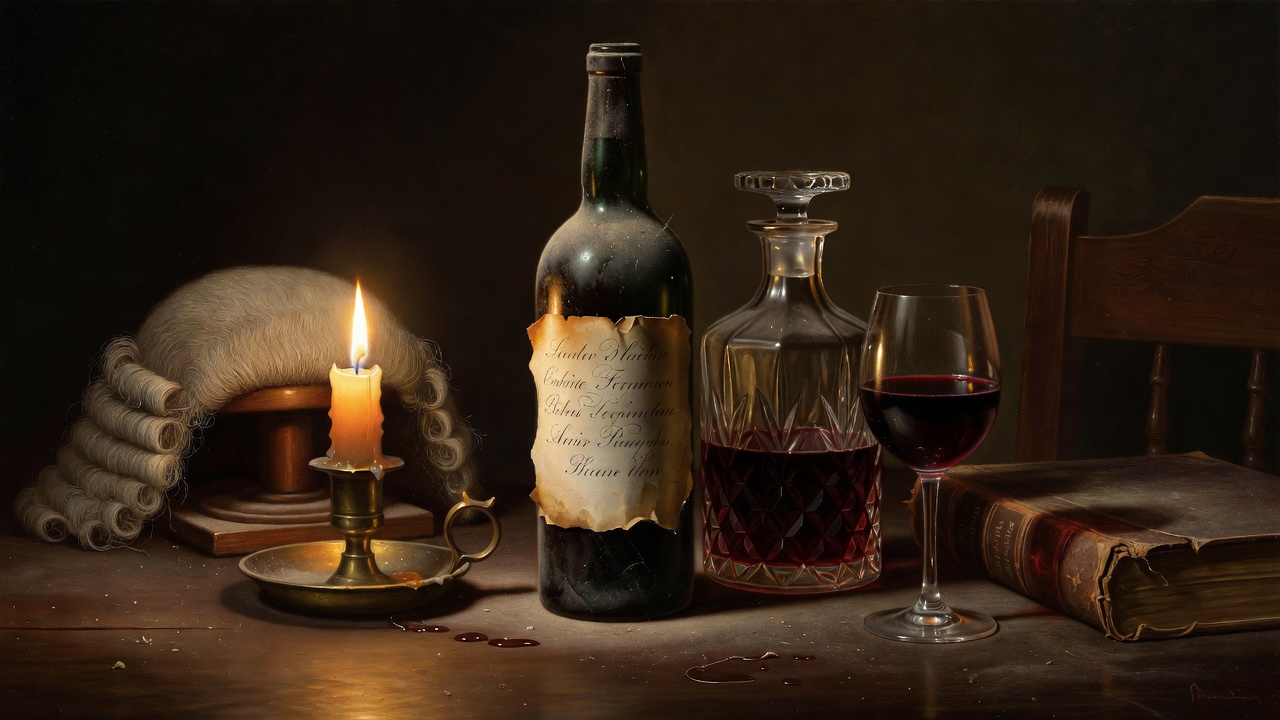
It was a claret. A very particular claret — a Château Laroque-Vimont of the year 1928, which means, to the small and feverish congregation of men who care about such things, a wine of the last great pre-war vintage of a small and now-vanished estate, of which perhaps a dozen bottles are believed to survive in all the world, each of them worth, at the hammer, somewhere north of forty thousand pounds. I should say at once, so that you may calibrate your sympathies correctly, that I have never tasted a real one, that I shall never taste a real one, and that I consider any man who would pay forty thousand pounds for a single bottle of anything to be suffering from a disorder of the soul for which wine is the symptom and not the cure. But the price is the price, and the bottle in this case was sold, at a respectable auction house off St James's, to a buyer of more money than palate, for forty-one thousand pounds, and was found, some months later, when the buyer's even richer friend had it opened at a dinner to general acclaim and one dissenting cough, to be a fake.
Not, I hasten to add, a bad fake. That was rather the trouble. That was, in the end, the whole of the case.
Sefton brought me the brief, which is his vocation, in the manner of a man delivering a telegram he has steamed open and disapproves of.
Sefton is my senior clerk. He's a long, grey, sorrowing man who has the bearing of an undertaker waiting to be paid and the soul, I have come to believe, of a Victorian tax inspector who died unfulfilled. He keeps my diary, my fees, and what little remains of my dignity, and he does not, on principle, approve of me, this disapproval being the warm and constant climate in which our entire association has flourished for thirty years.
"It's a wine one, sir," he said, and laid the papers on the desk with the particular care he reserves for briefs he expects to pay. "I thought you'd want it."
"You thought correctly, Sefton, which I note you find disagreeable."
"It pays privately, sir." He said privately the way a curate says Easter — the once-a-year word that justifies the rest of the calendar. "The solicitors are Hartley Grace. Proper firm. There's a conference fee and a brief fee and a refresher, and I've taken the liberty of agreeing all three before you could give it away to a widow."
"And the charge?"
"Fraud by false representation. He's a wine man — a Mr Albert Tunney, cellarman, fifty years in the trade. They say he made a counterfeit bottle of a very dear claret and put it into an auction as the real thing, and a gentleman paid forty-one thousand pounds for it."
I confess my heart, which has grown over the decades into an instrument of considerable selfishness, gave a small and disreputable leap. Most of my work, you understand, is theft, affray, the receiving of goods that fell from the back of a notional lorry, the occasional drink-driving of a magistrate's nephew — the honest, grubby, human stuff of the criminal courts, in which I have grown stout and content. A wine fraud is to me what a case involving an actual dragon would be to a barrister of more conventional appetites: the thing one dreamed of as a pupil and assumed one would never get.
"And the evidence?"
Sefton's long face arranged itself into the configuration of bottomless gloom he keeps for hopeless cases, which I have learned to read as a kind of professional aphrodisiac.
"It's a machine, sir." He pronounced machine with the relish of a man laying down a winning trump. "They put the wine in a machine. The machine says it's a fake, beyond any doubt, and there's a Master of Wine to swear to it, and a chemist from a laboratory to swear to the machine, and Mr Tunney's own thumbprint on the cork, near enough, and frankly I'd have sent it back, only —"
"Only?"
"Only the man won't say a word in his own defence, sir. Not a word. Pleaded not guilty, then shut up like a clam. Hartley Grace can't get a thing out of him. They thought —" and here Sefton did the thing he does perhaps three times a year, which is to look, briefly and against his will, like a man with a heart somewhere about him — "they thought you might. On account of the wine."
"A man," I said, "who's accused of forgery, faces ruin, and refuses to explain himself, is one of two things, Sefton. He's either guilty and ashamed, or innocent and protecting someone. And there's a very simple way to tell the difference, which the entire apparatus of forensic science is incapable of performing and which I shall perform over lunch."
"Yes, sir."
"Send Miss Nair in. We'll need someone who can read the machine, since I refuse to on principle, and the prosecution worships it, which is the more dangerous error. And tell Hartley Grace I want the bottle."
"The bottle's an exhibit, sir. It's in a property store."
"Then tell them I want the tasting note. Every bottle that's ever been opened by anyone who matters has a tasting note attached to it somewhere, written by some poor besotted fool, and a tasting note, Sefton, is a confession. It's the one place in this entire prosecution where somebody wrote down not what the wine is but what the wine did to them, and that, you'll find, is where the man lives."
Priya Nair came in twenty minutes later with her tablet held to her chest like a hymnal and the look of polite forbearance she has perfected over three years of watching me decline to enter the present century. She's eight-and-twenty, the cleverest junior in Hazlitt Court, and was my pupil, which means she's the one person in chambers entitled to be rude to me, a right she exercises with great economy and devastating effect.
"You've read it," I said.
"On the train. It's bad, Mr Fenwick." She has a way of saying bad that makes it sound like a settled scientific finding rather than an opinion. "I've been through the disclosure. There's gas chromatography, there's a carbon-dating result on the cork, there's spectroscopy on the glass, and there's a paper trail showing Albert Tunney consigned the bottle to the auction house himself. He signed the consignment form. His name's on everything."
"Sit down, Miss Nair, you make me anxious looming. Now. Explain the machine to me as though I were a clever child, which is the only register in which I'm capable of receiving information about machines."
She sat, and to her great credit she didn't sigh, though I saw the sigh form and die.
"The headline is the carbon dating. There's a thing called the bomb pulse — the nuclear tests in the fifties and sixties doubled the carbon-14 in the atmosphere, and it's been falling steadily since. So anything made from living material after about 1955 carries a chemical fingerprint of when. They tested the wine. The wine in the bottle is genuinely old, but —" she turned the tablet round, showing me a graph I declined to look at — "the alcohol shows traces of post-bomb carbon mixed in. Which means the wine was topped up, or blended, with something modern. A real 1928 can't contain carbon that didn't exist until 1955. It's not an opinion, Mr Fenwick. It's physics." She scrolled. "There's one odd line in Acheson's note, actually, that nobody seems to have made anything of. She says the base wine — the old wine underneath — is, and I'm quoting her, far finer than the deception required. She put a question mark beside it and moved on."
"It's physics," I agreed, "which is the modern word for the things we've decided to stop arguing with. And the Master of Wine?"
"Marguerite Acheson MW. She's — she's quite famous, actually. Television. She tasted it and called it a fraud before the lab even confirmed. She says the structure's wrong — too much fruit, not enough — I don't know the words —"
"Bottle age," I supplied. "Tertiary character. The smell of the cellar and the churchyard that comes into a great wine only with the decades — the leather and the truffle and the old roses, the things that say I have been waiting for you for ninety years. She's saying it tastes young underneath. And she's right, Miss Nair, because the wine is young underneath, because somebody made it." I leaned back, and felt the case beginning to turn over in me like a wine that has been waiting in the glass. "Now tell me the part nobody's emphasised. Tell me about the bottle and the label."
She frowned at the screen. "The bottle's genuinely old. Period glass, hand-blown, the right shape for the estate. The cork's old cork. The label —" she paused. "The label's odd, actually. The lab flagged it. It's not a printed reproduction. It's hand-lettered. Someone wrote the label by hand, in period ink, in a copperplate hand, and aged the paper. The prosecution say that just proves how careful the forgery was."
"Do they," I said softly.
"Mr Fenwick?"
"Miss Nair, I want you to attend to a distinction the entire prosecution has failed to draw, and on which, I begin to suspect, an innocent man's freedom depends." I poured myself a small glass of the chambers claret, which is not good claret but which serves to lubricate the machinery of thought. "A forger who's in it for money prints his labels. He buys a reproduction — there are men in this trade who'll sell you a hundred Lafite labels for the price of a curry, distressed and ready to soak — because his purpose is volume, and his pleasure is the cheque, and he hasn't got the time or the love to sit at a desk and write a label by hand in copperplate. Nobody writes a label by hand to deceive a stranger. You write a label by hand for one of two reasons. Because you're mad. Or because you cared."
She looked at me for a long moment, and I watched the thing happen behind her eyes that I have spent my life waiting to watch happen behind the eyes of the young — the moment the machine in her hands stopped being the answer and became, instead, a question.
"You think he made it," she said slowly. "You think Albert Tunney really did make the fake. But you don't think he made it to sell."
"I think," I said, "that we're going to have a conference with Mr Tunney, and that I'm going to bring a bottle, because no honest conversation has ever been conducted in a prison without one, and I shall claim it as a tasting exhibit, and you, Miss Nair, are going to find out everything there is to know about a dead man called — " I consulted Sefton's note — "called Mr Henry Vane, who consigned that bottle to the auction under Albert Tunney's name, watched a buyer of more money than palate pay forty-one thousand pounds for it, and then, weeks later, walked the same bottle into a dinner and watched it opened and praised as the genuine article. The Crown has charged the wrong man. They've charged the man who made the bottle. They should have charged the man who sold it, and the difference between those two, Miss Nair, is the entire moral history of the human race."
I should now, in fairness, tell you about Verey's, because no case of mine is ever really worked in chambers or in court but in the small dark amber room at the end of a court off St James's where Mr Verey the younger keeps the good Burgundy under the counter and the world at bay.
Verey's is a wine bar of the old kind, which is to say it's neither a bar nor especially about wine but is, rather, a confessional with a wine list, a low brown room with frosted glass and a fire that's always lit and never warm and a clientele of the sort of men who arrived at six and discovered, with mild surprise, that it was Thursday. I have done my best thinking there for forty years. Mr Verey the elder served me my first claret in that room when I was a pupil with holes in my shoes and an opinion of myself wildly in excess of my means, and Mr Verey the younger serves me still, having inherited the bar, the cellar, the frosted glass, and the particular gift of his father's, which was to know, to the half-glass, exactly how much wine a man needed in order to tell the truth and exactly when to stop pouring it before he told too much.
"The Tunney business," said Mr Verey, before I'd got my coat off, setting a glass in front of me unbidden, a small dark Pomerol that I recognised as a kindness disguised as a transaction. "It's the talk of the trade, Mr Fenwick. They're saying Albert faked the Laroque-Vimont."
"You know him?"
"Everyone in the trade knows Albert Tunney." Mr Verey leaned on the counter, which is the posture in which the real business of London is conducted. "He was the cellarman at Garrocks for thirty-five years — the merchants, in Pall Mall, before they were bought. He laid down half the great cellars in this city. He knows more about old claret than anyone alive, and that, Mr Fenwick, if you'll permit me, is exactly the trouble."
"Go on."
"A man who can spot a fake," said Mr Verey, "is a man who knows how to make one. There's no third kind of knowledge. The Master of Wine who exposes the forgery and the forger who painted it are looking at the same picture from opposite sides of the canvas. People forget that. They think expertise is a kind of innocence. It isn't. It's the opposite. It's the loss of innocence, made useful."
I have, over the years, paid a great deal of money to a great many barristers for opinions less valuable than the ones Mr Verey hands me across that counter for the price of a Pomerol.
"Tell me about Henry Vane," I said.
Mr Verey's face closed, very slightly, the way a man's face closes when you've asked him about money in a room where money is never discussed.
"Henry Vane," he said, "is dead. Died in the spring — a fortnight after the dinner, as it happens. Heart. He was a collector. A dealer too, latterly, when the money got tight, though he'd never have used the word." He refilled my glass without being asked, which is how I knew the next part mattered. "He and Albert went back fifty years. They were boys together in the trade, Mr Fenwick. Apprenticed at the same merchant's in 1971, the pair of them, two lads from nothing who loved wine more than was good for them. Albert had the palate. Vane had the patter. Albert ended up in the cellar in a brown coat and Vane ended up in the saleroom in a good suit, and that's the whole of the difference between them and the whole of the reason this has happened, if you want my opinion, which you're going to get whether you want it or not."
"I always want it, Mr Verey. It's the only honest evidence I'm ever given."
"Then here it is. Albert Tunney never sold a fake to anyone in his life. He hasn't got it in him. He's the gentlest man in the trade and the proudest, and the two things are the same thing. If Albert made that bottle — and I think he probably did, because nobody else in England could have — then he didn't make it to sell. And if it ended up in a saleroom, then someone took it there who shouldn't have." He straightened up, and the confessional closed for the evening. "That's all I'll say, because the rest is gossip, and you can't cross-examine gossip. But I'll tell you one more thing for nothing, Mr Fenwick, because your father was a customer and so are you. When you taste that bottle — and you will, knowing you — taste it for the love. A fraud tastes of greed. You'll know the difference. You always have."
They had Albert Tunney on remand, the bail magistrates having decided that a seventy-one-year-old cellarman with a bad hip and no passport represented a flight risk, which tells you everything you need to know about the bail magistrates, and I went to see him with a bottle declared as a tasting exhibit and Priya Nair to take the note.
He was a small, neat, folded sort of man, with the very clean hands of a person who has spent his life handling things more valuable than himself, and he sat across the table in the legal visits room with the particular stillness of the genuinely innocent, which is quite different from the stillness of the guilty. The guilty are still because they're calculating. The innocent are still because they've already lost everything that mattered and are merely waiting to be told the formalities.
"Mr Tunney," I said, "my name is Augustus Fenwick. I'm your barrister, whether you talk to me or not, and I should tell you at the outset that I've never in fifty years lost a case in which my client refused to speak, because I've never had one, because they all eventually speak, because I'm extremely tiresome and I've nowhere else to be." I set the bottle on the table. "I've brought you a wine. It's a 2015 Saint-Émilion, nothing remarkable, but it's drinking well and the prison authorities have, with a reluctance I found moving, allowed it in as evidence. I'm going to pour you a glass, because I find that men talk to me more readily once they understand that I'm the sort of man who brings wine to a prison, and you, I think, are the sort of man who'll understand exactly what that means."
I poured. He looked at the glass for a long time. Then he picked it up, the way I knew he would, by the foot, with two fingers, the way only a man who has poured ten thousand glasses for other people picks up a glass for himself, and he turned it to the grey prison light, and he smelled it, and something in his folded face came undone, just at the corner, just for a moment.
"It's corked," he said quietly. "Just slightly. You wouldn't notice. But it's there."
And I laughed — I couldn't help it — because the man was right, the wine was very faintly corked, I'd noticed it myself and decided not to mention it, and in that one sentence Albert Tunney had told me more about himself than the entire prosecution file: that he was a man who could not, even in a prison, even facing ruin, even with the only kindness he'd been shown in weeks sitting in front of him, tell a polite lie about a glass of wine. The truth about wine was simply not in his power to suppress. And a man like that does not forge a label to deceive a stranger.
"Mr Tunney," I said gently, "I know you made the bottle. I'm not going to ask you to deny it, because you can't, and I wouldn't ask a man like you to lie any more than I'd ask him to praise a corked wine. So let me tell you what I think instead, and you may stop me when I'm wrong. I think you made one bottle, once, by hand, with a real old wine inside it and a label you wrote yourself, and I think you made it for love and not for money, and I think you never in this world meant for it to be sold, and I think the reason you won't speak is that the only way to save yourself is to name the man who sold it, and that man was your friend, and that man is dead, and you'd rather go to prison than blacken a dead man's name." I paused. "Tell me where I've gone wrong."
The silence in that room was the longest of my career. And then Albert Tunney set down his glass, very carefully, by the foot, and he wept, the contained, apologetic weeping of a proud man who has been holding his breath for three months, and he told me everything, and it was worse and better than I had guessed, as the truth so often is.
Here is what he told me, and I'll tell it plainly, because it deserves to be told plainly once, before I dress it up for a jury.
Albert Tunney and Henry Vane had been boys together in the trade, exactly as Mr Verey had said. Fifty years. They had grown old in the same small world, the cellarman and the salesman, and somewhere in the middle of those fifty years there had been a wine. A real one. A bottle of the 1928 Laroque-Vimont, one of the dozen survivors, which had passed through Garrocks in 1974 when the two of them were young men, and which they had — there's no other word for it, and Albert used no other word — worshipped. They had not drunk it; it wasn't theirs to drink; it had been sold to a duke. But they had held it. They had photographed it. Henry Vane had said, that day in 1974, the thing that becomes the seed of a whole life: one day, Bert, before we die, you and me, we'll drink a bottle of that.
They never did. The money was never there at the same time as the bottle, which is the tragedy of every collector and most marriages. And then, two years ago, Henry Vane was diagnosed with the heart condition that would kill him, and given, with the brutal arithmetic of medicine, somewhere between one year and three, and he came to Albert Tunney, his oldest friend, and he said: I'm not going to die without tasting it, Bert. I've found one. It's coming up at auction. Forty thousand if it's a penny. I haven't got forty thousand. I haven't got four. But I'm going to taste that wine before I go if it kills me, which it will anyway.
And Albert Tunney, who had spent fifty years in cellars and could not give his dying friend forty thousand pounds, gave him the only thing he had, which was his hands and his knowledge and his love. He told Henry Vane: I'll make you one.
He did it the way only a master could. He found a genuinely old, genuinely empty bottle of the right estate — there are such things, drained and kept by collectors, worth a few hundred. He found a wine — a real, fine, old claret of a lesser year, decades old, the closest living thing to the lost vintage he could lay his hands on, blended with a touch of something younger to lift it, because the old wine alone was fading. He aged the cork. He wrote the label by hand, in period ink, in the copperplate he'd been taught as a boy, because a printed label would have insulted the bottle and insulted his friend and insulted the fifty years. And he gave it to Henry Vane, and he said, It isn't the wine. You know it isn't the wine. But it's the nearest I can make, and it's made by me, for you, with everything I've got. Drink it with someone you love and think of two daft lads in 1974.
And that, you understand, is no crime at all. There is no law in England against making a beautiful thing for a dying friend. A man may construct, in his own kitchen, with his own hands, a bottle of wine and write whatever he likes on it and give it to whomsoever he chooses, and the law has no more business in that kitchen than it has in a man's prayers.
But Henry Vane did not drink it with someone he loved.
Henry Vane, two lads from nothing, one with the palate and one with the patter — Henry Vane, who had spent fifty years in the saleroom in a good suit and was dying with the money gone and a dread of leaving nothing behind — Henry Vane took the bottle his oldest friend had made for him out of love, and he did the thing that the patter had always, in the end, been for. He consigned it to an auction. He let it be sold as the real 1928 Laroque-Vimont. He took the forty-one thousand pounds. And then, because the buyer's even richer friend wanted to open the bottle at the dinner with the people watching, Henry Vane sat at that dinner and watched a counterfeit his dying hand had carried into the world be poured for the wrong men, and he raised his glass, and he said it was sublime, and a fortnight later his heart, which had carried the secret as well as the disease, gave out.
"He used the consignment form I'd signed," Albert said, "years before, for honest stock. He had it. He filled in the rest. My name's on it because I trusted him with my name for fifty years, the way you do." He wiped his eyes with the very clean hands. "I worked it out at the dinner. I was there — they have the cellarman in to decant, you see, even now, even me. I saw the bottle come out and I knew my own label across the room. I knew what he'd done. And I looked at him, Mr Fenwick, and he looked at me, and he was so frightened, and so ashamed, and so — so poor, underneath the suit, after fifty years — that I never said a word. And then he died. And then they came for me, because my name was on the form and the wine was my work, and I thought: well. He's dead. It can't hurt him now, the prison, and it can't help him, the truth. So I'll take it. What's left of my life isn't worth a dead man's name."
I sat for a while in the silence of that decision, which was the most foolish and the most magnificent thing I had heard in a courtroom career largely composed of folly and magnificence.
"Mr Tunney," I said at last. "I'm going to ask you to let me defend you, which means I'm going to have to tell that story in open court, and Henry Vane's name will be in the newspapers, and there's no help for it. But I want you to understand something before you decide, and I want you to understand it as a craftsman, because that's what you are. You think the choice is between your freedom and your friend's good name. It isn't. There's a third thing, and it's the truest thing, and it's the only defence I'd be proud to run. Your friend did a weak and wicked thing at the end, out of poverty and fear, and the law must say so. But you did a beautiful thing, at the beginning, out of love. And those two facts can both be true in the same courtroom, Mr Tunney, because they were both true in the same friendship, and a jury — a real jury, of real people who've all loved someone weak — will understand that better than any machine, because it's the one thing no machine has ever been built to measure."
He looked at me for a long moment.
"You really do know wine," he said. "Mr Verey said you did."
"I know one thing about it," I said. "I know the difference between a wine made for money and a wine made for love. And so, Mr Tunney, with the help of God and a corkscrew, will twelve good citizens of this realm, before I'm finished with them."
I shan't bore you with the procedural skirmishing of the weeks that followed, the applications and the bundles and the endless modern paperwork that Sefton conducts on my behalf with the grim satisfaction of a man tending a grave. I'll say only that the prosecution, when they understood the shape of our defence, were delighted, because they thought it was a confession. He admits making the bottle! They could hardly believe their luck. They had a defendant who conceded the forgery, conceded his own hand, conceded the label — and they failed entirely to notice that we had conceded everything except the one thing that constitutes the crime, which is the false representation to the buyer, the selling of it as real, the act that Albert Tunney never committed and Henry Vane committed alone.
For fraud by false representation, you understand — and I render the law lightly, as is my custom, this being a story and not a statute — requires that the defendant himself make a false representation, dishonestly, intending to make a gain. Albert Tunney made a bottle. He made no representation to anyone. He told the only man who ever held it the entire truth: it isn't the wine. The false representation — the dishonesty, the gain — belonged wholly to the dead man who took it to the saleroom. And the prosecution, dazzled by their machine, had built their entire case on proving that the bottle was a fake, which we cheerfully admitted, and had quite forgotten to prove that Albert Tunney had told the lie, which he hadn't.
But you cannot win a case like that on the law alone, whatever the textbooks say. A jury that believes a man is morally guilty will convict him whatever the judge says about the elements of the offence, and a jury that believes a man is morally innocent will acquit him in the teeth of the evidence, and the whole art of the thing — the entire fifty years of it — lies in giving twelve strangers permission to feel what they already, in their decent hearts, want to feel. The law is the door. The human truth is the key. And the key, in this case, was a thing the prosecution had put into evidence themselves, without ever understanding what it was.
It was the tasting note.
The trial came on before His Honour Judge Wickstead, which I confess gave me a moment's gloom, Wickstead being a humourless and aggressively modern judge of the sort who refers to a spreadsheet as the best evidence we have and regards my entire manner of practice as a charming survival from an age that ought, in his view, to have been quietly euthanised. He had a particular reverence for the machine and a particular suspicion of me, and the combination, in a case that turned on persuading a jury to trust a palate over a spectrometer, was not promising. But a difficult judge, I've always found, is a gift to the advocate who understands him, because the jury sees the judge lean against you and, being English, immediately and instinctively takes your side. There's nothing the British people love like a man the authorities have clearly decided to dislike.
The Crown's case went in like a dream, as the Crown's case generally does before I get up. The chemist explained the bomb pulse, and the carbon, and the physics, and the jury nodded along, dazzled, as people are dazzled by anything they can't follow but feel they ought to respect. And then they called Marguerite Acheson MW, who arrived in court the way the famous arrive everywhere, as though faintly surprised to find the rest of us already there, and she gave her evidence beautifully, because she was good, genuinely good, the best palate in England with a camera pointed at it, and she said the wine was a forgery, and she said how she knew, and she was, I want to be clear, entirely correct.
I rose to cross-examine her in the after-lunch hush, which is my native hour.
"Ms Acheson. You're the finest taster in this country. I shan't insult you by pretending otherwise; I've watched your programmes, on the single occasion I could find the device, and I learned things." She inclined her head, gracious, wary. "You tasted the wine in this bottle. And you said — I have your words — that it was 'an accomplished fake, but a fake.' Yes?"
"Yes."
"Tell me, Ms Acheson — and I ask as a fellow enthusiast, not as an advocate — what is the difference, in the glass, between an accomplished fake and a clumsy one?"
She considered. The jury leaned in; this was the part they'd come for, secretly, the wine talk, the witchcraft. "A clumsy fake is obvious. Wrong grapes, wrong age, a young wine dressed up. You spit it out and you laugh. An accomplished fake is harder. The maker has used a real old wine of a lesser year, close to the right region, and dressed it carefully. It can fool almost anyone for almost a minute."
"For almost a minute. But not you, for a full one."
"No."
"Because in the second minute it tells the truth about itself."
"...Yes. That's well put. In the second minute the structure shows. The fruit's too forward, the finish too short. It hasn't got the bottle age. It tastes — younger than it claims."
"It tastes," I said, "like a wine made by someone who knew exactly what he was imitating and could not, with all the skill in the world, manufacture ninety years of waiting. Yes?"
"Yes. That's exactly it."
"Now, Ms Acheson." I let the room settle. "A man who fakes wine for money — the commercial counterfeiter, the man who does it by the case for the cheque — does he write his labels by hand?"
She blinked. "...No. He'd never have time. He buys reproduction labels. There's a whole trade in them."
"Does he find a genuine antique bottle of the correct estate, period glass, hand-blown, to house a single fake?"
"No. That would be madness. The bottle's worth more than the margin. He'd reuse a modern bottle and re-label it."
"Does he put a real, fine, old wine inside — a wine of genuine age and genuine quality, decades old, costing real money — when a cheaper young wine, well dressed, would fool the buyer for the only minute the buyer ever spends with it?"
She was silent for a moment. I have learned to love that particular silence; it's the sound of an honest expert arriving, by her own road, at my destination.
"No," she said slowly. "No. That's — you're right, that's the strange thing about this bottle, I noticed it at the time. The wine inside is too good. It's a genuinely lovely old claret. A commercial faker would never waste it. You'd use the cheapest thing that passes. Whoever made this —" she stopped, hearing herself.
"Whoever made this," I said gently, "spent more on the materials than he could ever recover, took a hundred times more trouble than the deception required, and put a real and beautiful old wine, that he plainly loved, into a bottle he housed in antique glass and labelled by his own hand in copperplate. Ms Acheson — you're the finest palate in England. I ask you, as one enthusiast to another, across this courtroom: does that taste to you like the work of a man chasing a cheque? Or does it taste like the work of a man making the best and truest thing he possibly could — for someone?"
The courtroom was very still. Marguerite Acheson MW, who had come to bury Albert Tunney and was far too good a taster to do it dishonestly, looked at me, and then looked, for the first time, at the small folded man in the dock, and something moved across her face that I have seen move across the faces of experts perhaps a dozen times in my career — the look of a person realising they have measured everything about a thing except the only thing that mattered.
"It tastes," she said quietly, "like the most careful fake I've ever put in my mouth. And I never once asked myself why anyone would take that much care over a single bottle." She paused. "It tastes like it was made for someone."
"Thank you, Ms Acheson," I said. "No further questions." And I sat down before the prosecution could repair the wall I'd just removed a single, load-bearing brick from, because that's the whole secret of cross-examination — you don't demolish the house, you take out the one brick the roof is sitting on, and then you sit down and let them watch it fall on their own time.
It was the tasting note that finished it, and I want to tell you about the tasting note, because it was the most human document I have ever held in a courtroom and the prosecution had filed it as Exhibit 14 without, I am convinced, a single one of them having read past the first line.
When a great bottle is opened at a dinner of the kind Henry Vane attended, someone writes a note — the host, or a guest, or the sommelier — recording the wine for posterity, the way you'd record the weather on a wedding day. This note had been written by the buyer, the rich man's even richer friend, an amiable fool with a cellar and a fountain pen, and it had been seized by the police as proof that the wine had been served and praised as genuine. The prosecution's purpose in filing it was purely to establish the gain — see, my lord, the wine was opened, it was believed, the fraud succeeded. And it did all that. But it did one more thing, lower down, that nobody on the prosecution side had bothered to read.
I rose to make my closing speech, and I had the tasting note in my hand, and I read it to the jury slowly, the whole of it, in the silence I'd spent three days building.
"'Laroque-Vimont 1928,'" I read. "'Opened at dinner, 14th of March. A wine of extraordinary emotion. H. brought it himself, would let no one else carry it, kept his hand on the bottle the entire evening like a man with a child. When it was poured he could not speak. He said only, "It's the nearest I'll ever come." We thought he meant the rarity. He wept a little. We were embarrassed and pretended not to see. The wine itself: deep, sweet, a touch forward, perhaps — H. said that was the year — but with a finish that broke your heart, somehow, more than a wine should. H. did not finish his glass. He kept it. He took the last of it home in the bottle. He died sixteen days later. I have kept this note because I have never, before or since, watched a man love a thing the way Henry Vane loved that wine, and I find I do not entirely understand what I saw.'"
I let the note fall to my side.
"Members of the jury," I said. "The Crown filed that document to prove a fraud. And it does. There was a fraud. A dying man named Henry Vane took a bottle that was not what it claimed to be, and he sold it as though it were, for forty-one thousand pounds that he badly needed and did not deserve, and that was a crime, and I do not stand here to tell you otherwise. The man who committed that fraud is beyond the reach of this court, which is a mercy for him and a frustration for the Crown, and so they have done what the law, at its worst, has always done — they have looked for the nearest available hand. And the nearest available hand belonged to the gentlest man in the wine trade, who is guilty of nothing whatever except making the bottle, and who has sat in this dock for three months in silence rather than say one word against a friend who betrayed him, because that, members of the jury, is the kind of man he is, and you have watched him be it.
"The Crown will tell you that the wine is a fake, and they're right, and Albert Tunney made it, and he admits it, and there's an end of it. But I ask you to do the one thing this entire prosecution has failed, from first to last, to do. I ask you to ask why. The machine measured the carbon, and it was right. The chemist measured the alcohol, and he was right. The great taster measured the structure, and she was right, and then, to her enormous credit, she stood in that box and admitted that not one of them had ever once asked the question a child would ask of any beautiful and useless thing — who was it for?
"Because a fake made for money looks one way, and a fake made for love looks another, and you have heard, from the finest palate in England, that this fake — the antique bottle no faker would waste, the fine old wine no faker would pour away, the label written by hand by a man who could not insult the friend he made it for — this fake was made for love. Albert Tunney made one bottle, once, in fifty years, for a dying man he had loved since they were boys, and he told that man the entire truth about it — it isn't the wine — and he gave it away, and he made not one penny, and he made no representation to any living soul, because the only soul he ever spoke to about that bottle knew exactly what it was.
"The man who lied is dead. The man who made a beautiful thing out of love is in your hands. The law of fraud requires a false representation, made by this defendant, and there isn't one, and there never was, and the Crown's own document proves it, because Henry Vane wept over that bottle, members of the jury, and you do not weep over a fraud. You weep over a gift.
"Acquit him. Not as a kindness — though it would be a kindness, and the world is short of those. Acquit him because the machine told you what the wine was, and it took a tasting note written by a stranger to tell you what the wine was for, and the difference between those two things is the difference between a forger and a friend, and you, unlike the spectrometer, are equipped to tell them apart. It's the one thing, members of the jury, that you can do and the machine cannot, and it's the reason — the only reason — that we still, after all these years, decide these matters by putting twelve human beings in a room and not twelve very clever clocks."
I sat down. I confess my hand was not entirely steady, which it has not been at the end of a speech for forty years, and which I have stopped being ashamed of.
The jury were out for two hours and eleven minutes, which is exactly the right length of time — long enough that they took it seriously, short enough that they were never really in doubt — and they came back and they acquitted Albert Tunney on the single count on the indictment, and I watched the small folded man in the dock put his very clean hands over his face, and I looked away, because some things are not mine to watch, even when I have caused them.
Judge Wickstead, to his credit, did the decent thing, which surprised me, the modern not always being indecent, merely impatient. He discharged Albert Tunney, and then he said, looking not at the jury but at me, in the dry voice of a man conceding a point he had hoped never to concede: "Mr Fenwick. The court is occasionally reminded that the oldest instruments are not always the least precise. I shall not make a habit of saying so." Which, from Wickstead, is the equivalent of another man weeping into a flag, and I bowed to him with a flourish I knew would annoy him, because one must take one's small pleasures where the law permits.
Albert Tunney came to find me afterwards, in the marble cold of the court hall, and he didn't know what to do with his hands, freedom being harder on the hands than custody.
"I don't know how to thank you," he said.
"You can thank me," I said, "by telling me one thing, as a craftsman, between ourselves, and never repeating it, because it's the one question I couldn't ask in there and have been dying to ask for three weeks. The wine you put inside that bottle. The real old claret. What was it?"
And Albert Tunney smiled, for the first time since I'd met him, a small private smile of enormous mischief, the smile of a man who has guarded one last secret through all the others.
"A 1961 Laroque-Vimont," he said. "The estate's last great year before it folded. I'd kept a bottle thirty years. Bought it the week my daughter was born." He looked at his clean hands. "I put my own best wine in it, Mr Fenwick. The wine I'd been saving for the happiest day of my life. Because Henry was dying, and the happiest day of my life had already happened, and his hadn't, and never would. So I gave him mine." He shrugged, the small shrug of a man who has explained the obvious. "That's why it tasted of love. It was love. That woman in the box — she tasted my daughter being born. She just didn't have the word for it."
I have, as I have said, defended the guilty and the foolish and the merely unlucky for the better part of fifty years, and I have heard a very great many sentences in a very great many courtrooms, and I have never heard one to match it, and I never shall.
Mr Verey was waiting for me at the bar that evening, as he was waiting for my father before me, and he poured me something I didn't recognise from a bottle with no label, which is his highest compliment, and he said: "Well?"
"Acquitted. Two hours and eleven minutes."
"And the wine inside the fake?"
"You knew, didn't you. You knew the whole time."
"I knew Albert," said Mr Verey, "and I knew the year his daughter was born, because he stood at this counter the night she was, white as the cloth, and I gave him a brandy because he was no use for wine. I didn't know. But I hoped. You can't cross-examine a hope, Mr Fenwick. I had to leave it to you." He lifted his own glass, a thing he does perhaps twice a year. "To Albert. And to the only barrister in London who'd have thought to taste the difference."
"To Albert," I said. "And to your father, who taught me to."
We drank, in the amber dark, in the room where the world is kept at bay, and I thought, not for the first time, that everything I have ever truly understood about the law I learned across a wine bar counter from a man with no legal training whatever, which is a thought I keep from the Bar Standards Board on the grounds that it would only upset them.
I came home late to the mansion flat near Gloucester Road, where the Home Secretary was at the kitchen table with the crossword, which she does in ink, a habit I have always regarded as the single most intimidating thing about her, and there's a list.
"You're late," she said, not looking up. "And you smell of something I don't recognise, which means Verey gave you the good stuff, which means you won."
"I won."
"The wine man."
"The wine man." I sat down heavily across from her, in the warm small light of forty-one years, and I told her the whole of it — the bottle, the friend, the dying man, the wine the colour of a daughter being born — because I tell her everything in the end, it being the only confessional more reliable than Verey's, and she listened the way she listens, which is to say while filling in seven down, which is the most flattering form of attention I know, because it means she trusts me to be interesting without being watched.
When I'd finished she was quiet for a moment, and then she set down the pen, which she does perhaps twice a year, and she said: "He gave his friend the wine he was saving for the happiest day of his life."
"He did."
"And then his friend stole it and sold it and let him take the blame, and he'd rather have gone to prison than say so."
"He would. He nearly did."
She looked at me across the table for a long moment, with the particular expression she keeps for the rare occasions when I have done something she finds it difficult to be sardonic about, and then she said, very dryly, in the voice of a woman who has spent forty-one years declining to let me grow too pleased with myself: "Well. I'm glad somebody in this story understood what to do with the bottle he'd been saving." She picked the pen back up. "There's a Margaux in the cupboard you've been keeping for a special occasion for three years, Augustus. You've been saving it so carefully that I've watched it go off in real time. It's probably vinegar by now."
"It's a 2009," I said, with dignity. "It's barely opened its eyes."
"Open it tonight."
"It's not a special occasion."
"You acquitted a man," said the Home Secretary, "who gave away the wine he was saving for the happiest day of his life, because his happiest day had already happened and his friend's never would." She did not look up from the crossword. "Six letters. To delay a pleasure until it spoils. I'll give you a clue. It's what you've been doing with that Margaux, and it's the one mistake the man you defended today was far too wise to make."
I sat for a moment in the warm light, and I thought about Albert Tunney, and the 1961, and the happiest day that had already happened, and I got up, and I went to the cupboard, and I opened the Margaux, which was not vinegar at all but was, in fact, exactly ready, the way the best things are ready precisely at the moment you finally stop saving them, and I poured two glasses, and I set one in front of my wife, who had solved the case, the marriage, and seven down, all without putting down her pen.
"The word," I said, "is defer."
"I know what the word is, Augustus. I was waiting for you to."
We drank the Margaux at the kitchen table, the two of us, on no occasion whatever except the enormous one of still being there, and it was the best bottle I have opened in years, for the very simple reason, which the spectrometer would never have detected and the Master of Wine would have had no word for, that I finally drank it with someone I love, on the nearest thing to the happiest day of my life that an old man is ever likely to get, which is, I have come to understand, simply any evening you are wise enough to recognise as one.
The machine measures what a thing is. It has never once asked what it's for. That is left, thank God, to us — to twelve strangers in a room, and to a cellarman with very clean hands, and to a woman doing the crossword in ink, who knew, long before I did, exactly what the bottle was for.
Enjoyed this story?
Read next
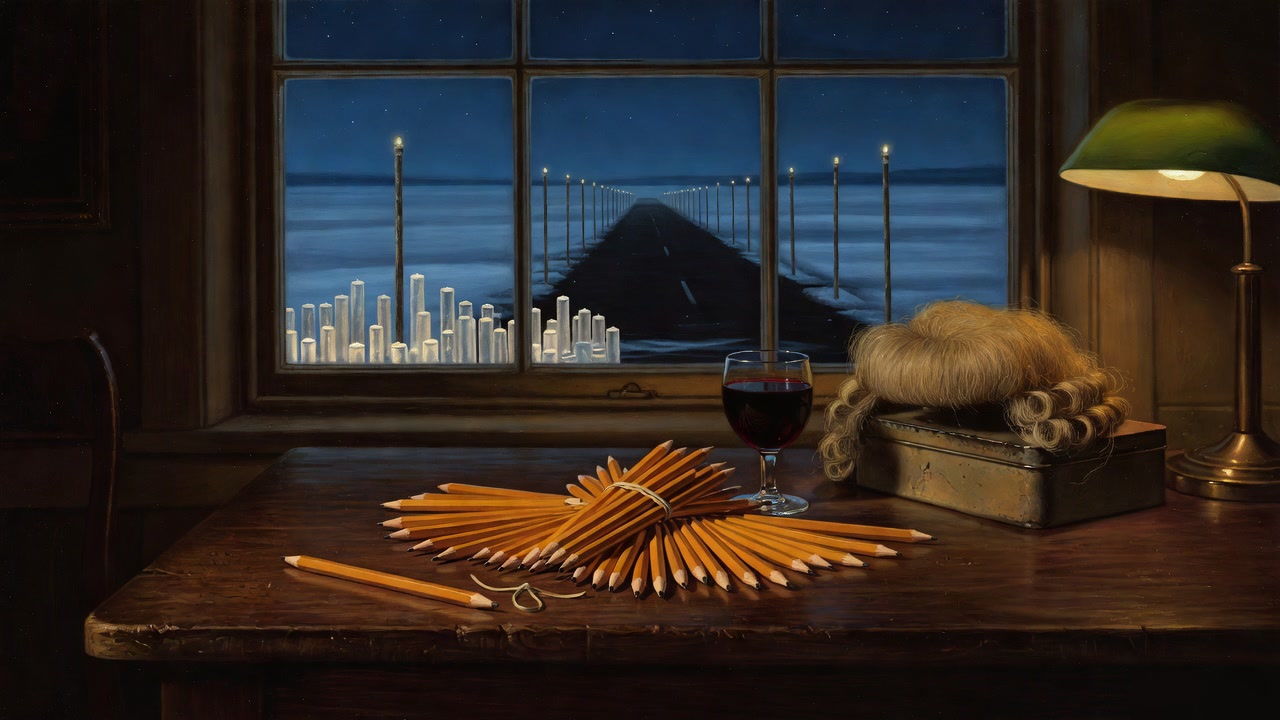 On Michaelmas Day a signwriter came with a pot of black to paint every name off the board at the foot of our stair, and he did mine last, because I asked him to — and to explain why, I must go back through a fraud trial at Southwark about a frozen road in the far north of Canada that a perfectly good radar swore was a metre thick.
Candle Ice
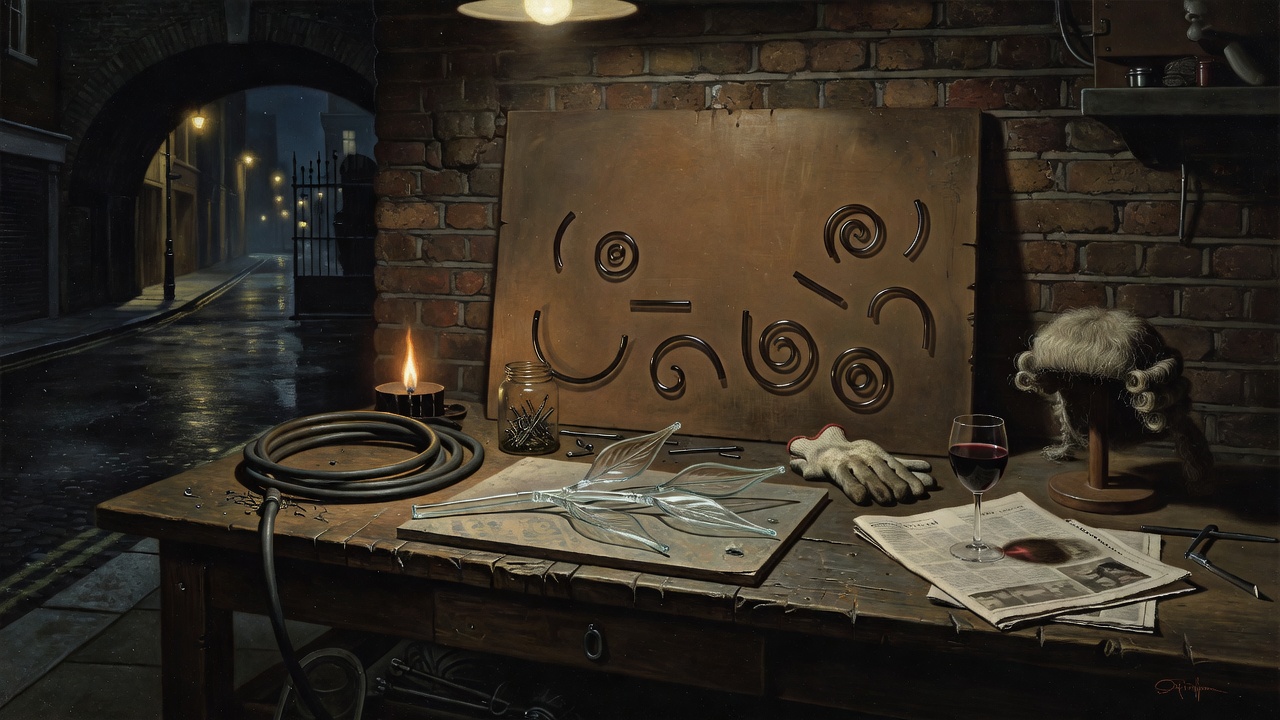 A developer's scaffold went up over a dead neon sign at the wrong end of our own street, and my wife of one-and-forty years climbed it at ten past seven in the morning with two flasks of tea and would not come down; and because a man cannot defend his own wife, the finest advocate of his generation sat at the back of a magistrates' court with his hands in his lap and no standing to say a single word, and there learned — at the same moment as the bench, the usher, and a bored young man from the Crown — what she had been quietly paying for since the year before we met.
The Light She Kept On
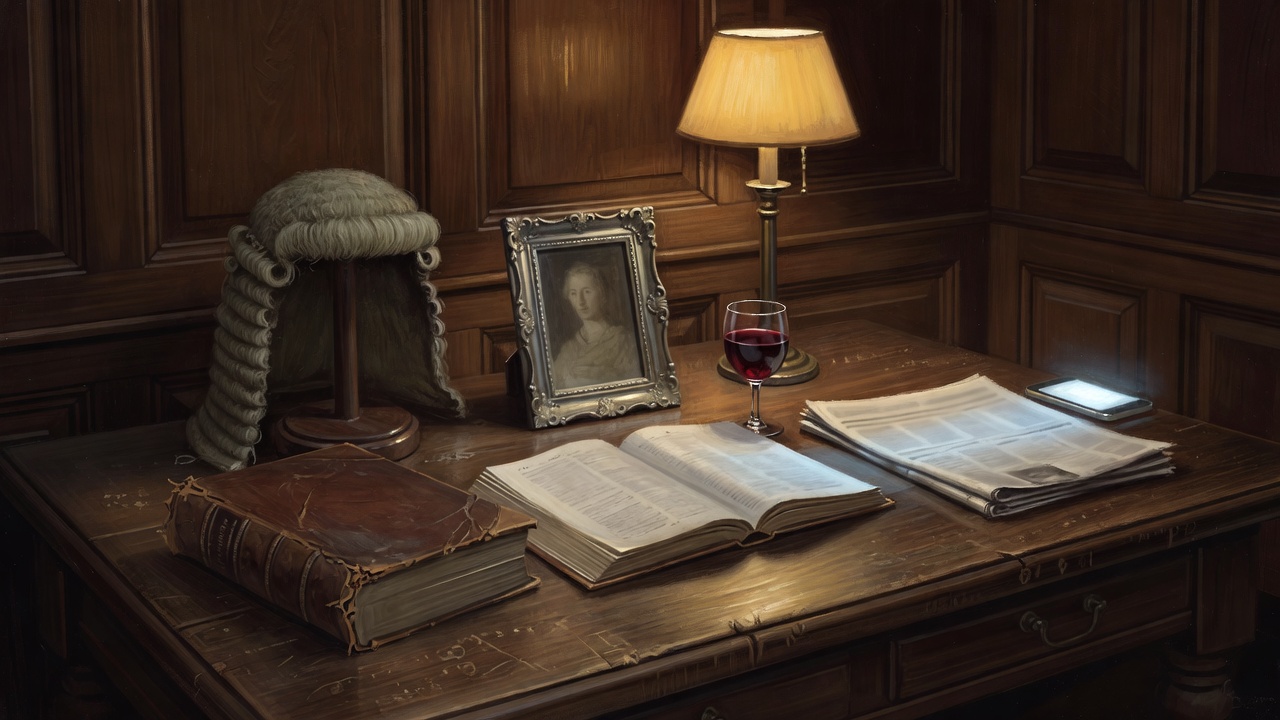 Eleven seconds of telephone footage had shown the whole of England a man seize a frightened woman, fling her to a railway platform, and step over her and walk away — and the whole of England had tried him, named him, and condemned him before luncheon; so that by the time the Crown of England got round to charging Daniel Quist with assault, there was nothing left to do but the trial, the verdict having been handed down weeks before by a jury of forty thousand strangers who had each seen the same eleven seconds and not one of them the twelfth.