
Walk-Away
Content notes
estrangement, alcohol, divorce
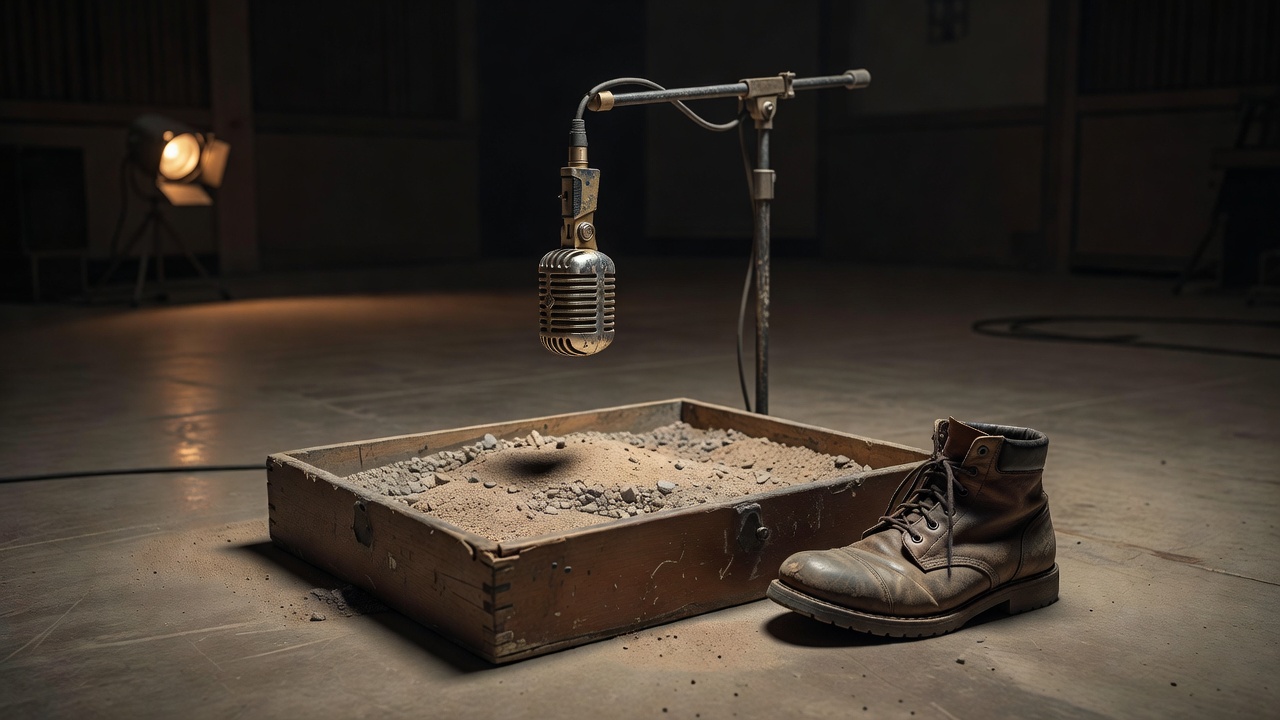
The studio is on the second floor over a tire place, and the room never learned the difference between day and night, so I work to a clock I have to look at. Curtains nailed over the one window. Carpet on the walls, carpet on the floor, a pit dug into the carpet and filled with gravel, and another with sand, and a square of old boardwalk I took up from a pier they tore down. Doors on hinges that go to nowhere. A coat rack hung with shoes.
You make the sounds the camera didn't get. That is the whole of it. A man walks across a room in a movie and the microphone was busy hearing him talk, so later I walk across the room for him, in the dark, in my socks with a pair of his shoes on my hands, and I match my steps to his feet on the screen until you would swear it was him walking. It is not him. It was never him. It is me, an old man on his knees in a pit of gravel, making a younger man cross a floor.
I have done it forty years. There's less of it now. The young ones pull the steps from a library, click and drag, a footstep some other man recorded twenty years ago in some other pit, and it's close enough, and close enough is the whole industry now. I keep the studio because the rent is what it is and I'm too far in to do anything else. Two, three jobs a month. A documentary that wants rain on a tin roof. A car ad that wants a door to sound expensive.
I was at the bench cleaning the heads on the old deck, which nobody uses but me, when the phone went with a mail coming in.
It was from the boy.
I call him the boy. He's thirty-six. He does sound too, down the coast, the real kind, the kind with a salary, mixing for a studio that does television I've never watched. He got there on his own. I want that on the record. Whatever else, he got there on his own.
The mail had no words in the body of it. Just a file, and then in the subject line, where another man might have put hello, he had put:
> walk-away's out of sync. fix it.
That was all. Nine years and that was all, and it was so much like him, and so much like me, that I sat there a while with my thumb over it before I opened it.
A walk-away is a thing we make. A man leaves a room and the door shuts and you hear his steps go off down a hall, getting smaller, until the sound of him is gone. It is one of the first things you learn. You record it walking off the mic, heel and toe, slow, and you let the room take the rest of it, the falling-away. There is a trick to it. You don't speed up to get small, the way a young one does, thinking distance is hurry. You stay the same and the room does the leaving for you. A good walk-away is a man going at the same pace he came in at, only the world lets go of him. I have made a thousand of them. I made them for men who never existed leaving rooms that were only paint.
So I thought it was work. I thought the boy had a job he couldn't crack and had swallowed nine years of whatever it is he swallows and asked the one man he knew could do it. I'll tell you the truth. My chest did a thing it hadn't done in a long while. He'd come to me. With his salary and his real studio and his television, he had a sound he couldn't fix and he'd come to his father.
I opened it.
It was old. You can hear age in a recording the way you can smell it in a coat. This was tape once, then somebody had pulled it to a file, and it had the hiss in it, the warm dead hiss of a cassette deck left running. A child's recorder. He'd had one. A little silver thing with a red button I bought him at the drugstore the Christmas he was six, because he followed me to work and crouched at the edge of the pit and watched me make the world out of junk, and his mother said get him his own then if he loves it so, and I did.
He used it on everything. The dog drinking. The rain in the gutter. He'd lie under the kitchen table with the thing held up and tape his mother and me talking, just talking, nothing, the radio and the dishes, and play it back so quiet you had to put it to your ear, and grin like he'd stolen something. I told him once you couldn't keep a thing by taping it. You only kept the sound it made going by. He didn't believe me. He was six. He thought if you got the sound you got the thing.
What was on the file was a house at night. My house. Ours. You know your own rooms the way you know your own breathing, even the sound of them, even thirty years on. That was the kitchen. That was the bad board by the stove that I never fixed and said every week I'd fix. The refrigerator we had, the one that came on with a knock. A clock. His mother is not on it. I listened for her and she is not on it, and that's its own thing, because it means it was late, late enough that she'd gone to bed, and the boy was up with his recorder in the dark when he wasn't supposed to be.
And then me.
You don't hear me come in. The first of me is the door, the back one, the storm door with the cylinder that hissed when it shut, and I will tell you, no foley man living could make that hiss. I have tried. It is gone. They don't make that door.
Then my steps. Across the kitchen. Heel and toe on the linoleum, and the bad board, and a pause at the bad board, and then on.
> 0:09 — door (storm, pneumatic closer). good. real ambience, don't touch. > 0:11 — first footfall. THIS is the sync problem. read on.
He had put notes in. Of course he had. He couldn't write me a sentence but he could mark up a file, line by line, the way we both were taught, the way I taught him, crouched at the pit, this is where it's loose, this is where it's tight, the picture and the sound have to agree or the whole lie falls down. He had sent the notes in the body of a second mail that came a minute after the first, and I read them with the sound going, the way you're meant to, his words in the margin of that night.
I knew the night by the third step. I had known it, I think, before that, and was not letting myself.
It was the night I left.
There's a version of it I've carried. I want to be plain about that, because a foley man of all people should know the difference between the sound of a thing and the thing. In my version I left careful. That's the word I've used to myself for thirty years, careful, the way you'd say it about a man setting a glass down so it doesn't ring. In my version I came in late and quiet so as not to wake the house, and I stood in the kitchen a long while, a long while, deciding, and I went and looked in on the boy asleep, and then I took the one bag I'd packed two days before and I went out the front so the front door's softer latch wouldn't carry, and I drove off slow with the lights off to the corner. Careful. A man doing a hard thing as gently as a hard thing can be done. I have set that version down so many times it had the weight of a true thing.
> 0:11–0:12 — three footfalls, kitchen, fast tempo. ~108 bpm. you're walking quick. > there's no pause. i need a pause here for picture but there's no pause in the source.
No pause.
I played it again. I am good at my work. I have the best ear left in this town and there is no one to say different anymore. I played it again and I counted, the way you count, with my hand on the bench, and the boy was right, the boy was exactly right, the man on the tape goes across that kitchen quick, quick, a hundred and eight if it's a beat, the steps of a man who has already gone and is only now letting his body catch up to it. No pause at the bad board. He doesn't pause at the bad board. He doesn't stop in the middle of the room a long while deciding. There is no long while. There is a door and there are eleven steps and there is the other door and there is a car.
Eleven steps. I have made a thousand walk-aways and I never once made one that short.
I shut it off and sat in the dark room with the carpet on the walls and did not turn the work light up.
The boy thought there was a sync error. That's the thing. He thought the picture and the sound disagreed. He'd cut to it, you see — he must have, down in his real studio with his salary, he must have been working on some show, some scene of a man leaving a house, and reached for a memory the way we all reach for them, and found this in whatever box a man keeps such things, this old file off a child's recorder, and laid it under his picture. And the man in his picture stood in the kitchen a moment, the way men do in pictures, the way men are supposed to, and the sound under him did not. The sound under him just went. And the boy, who is good, who got there on his own, heard the disagreement and could not place it and did the only thing his training gave him to do.
Fix it, he said. Put the pause back in. Make the going look like the leaving I have allowed myself to remember.
He doesn't know it's me. That came to me sitting there. He was six. He doesn't remember holding the recorder. To him it's just a clean old capture of a house at night, useful, a door and some steps, no idea whose, no idea that the something it's out of sync with is the truth.
Or he knows exactly, and this is how a son says it. I have gone back and forth. I will go back and forth on it the rest of my life. With the two of us you cannot ever tell the silence that means nothing from the silence that means everything, and that, his mother used to say, is the whole disease of you, the both of you, you build the quiet and then you live in it like it's a house.
I could fix it. That's the joke of the thing. It's the easiest job in the world. I've got the pier boards. I've got the right shoes near enough, a work boot with a worn heel. I'd lower the mic and get down in it and walk his picture's tempo, slow, with a good long pause at the center where the man decides, where the man looks in on his sleeping child, where the man is careful — and I'd lay it under the kitchen ambience he wants kept, the storm door he wants kept, and the sync would be perfect and the boy would never know the difference, because that's the work, that's the entire work, to make the lie agree with the picture so completely that no one alive can hear the seam.
I sat with the boots in my lap. I had got them down off the rack without deciding to. I sat a long while. A long while — there, that's where it lives, the pause, the one I have kept for myself all these years. I put it in my own account and left it out of the floor.
Then I did the work.
I lowered the mic. I got down on my knees in the pit, which my knees do not forgive the way they used to. I put the boots on my hands. I had his old file going in the cans so I could hear the room I was walking back into, the knock of that refrigerator, the clock, the board.
And I could not put the pause in.
I tried. God knows. I went heel and toe across those pier boards slow as a hymn, the way you do a walk-away, the way I have done a thousand for men who never were, and it was a lie. My ear knew it before my hand did. It sat on top of that night like oil on water and would not go down into it. The real thing was under it the whole time, his real thing, the eleven quick steps, the no-pause, the man already gone, and everything I laid over it was just a foley man making a stranger cross a floor.
I did it again. I have always been able to do a thing again until it's right. That's the trade. You don't get the heart, you get the rhythm, and you do it again until the rhythm and the picture lie down together. I put the pause in at the bad board where it should have been, where a man who loved the house would have stood a second on the loose board he kept meaning to fix and felt the give of it under him one last time. I made it good. I made it tender. It was the most tender pause I ever laid down and it was the falsest sound I ever made, and the boy's six-year-old tape went on underneath it the whole while, plain, quick, eleven steps, saying no, no, that isn't how, that isn't how it went.
So I stopped lying. I got up off the boards. I went to the gravel pit, which is nothing like linoleum, and I took the boots off my hands and put them on my feet, which is not how it's done, you never wear them, you'll never get the weight right wearing them — and I stood at the edge of the gravel and I did not think about tempo and I did not think about the picture and I let the body that did it once do it again.
Heel and toe. Quick. No pause at the center. A man who has already left, letting his legs catch up.
Eleven steps. It came out at eleven without my counting. The same body keeps the same count. I stood there after with the cans on, both of us going at once, the boy at six in his dark kitchen and the old man over the tire place, the two recordings laid one on the other, and they were in sync. They were in perfect sync. They had always been in perfect sync. The only thing out of true in the whole of it was the version I'd been walking in my head for thirty years, and I'd finally gone and recorded the truth instead, and there was no use for it. He didn't ask for the truth. He asked me to fix it.
It's morning now. I can tell because the man opens the tire place under me and the compressor starts.
I've got two files sitting here.
One is the job. The careful one. The long-while at the center, the pause, the man deciding. It's good work. It's the best walk-away I ever made and no one will ever hear it as the lie it is, least of all him, and if I send it the sync will be perfect and the picture and the sound will agree and he'll say nothing, which is how he says thank you, which is how I taught him, God help us both, to say it.
The other is the true one. Eleven steps, quick, no pause. It's no good to him. It won't fit his picture. It's just a record of how a man actually leaves, which is fast, which is without looking in on the sleeping child, which is with the body already in the car. If I send that one he'll hear the disagreement worse than before and won't know why, or he'll hear it exactly and know everything.
I've got my thumb over the two of them the way I had it over his mail.
I keep thinking about the recorder. Six years old, up past his bedtime, crouched in the dark with the red button down, taping the house the way I taught him to tape a room, for no reason, for the love of it, for the sound of his own home at night. And the door went, and the steps came, and he must have held very still the way you hold still when you're catching something delicate, must have kept the button down through all eleven of them and the second door and the car, getting it all, getting it clean, the best capture of his life, and never once knew what it was he had.
Or knew. And kept it thirty years. And sent it to me with one line.
The compressor's still going down there. It has a flat in the belt; it ticks. A man could fix that in ten minutes with the right tool. Nobody will.
I haven't sent either one. The boy will write again or he won't. With us it could go years. I am not going to fix the sync. That much I have decided, here in the morning, which is the one decision I have made in this whole thing and the first true one I've made about that night.
I am going to send him the eleven steps.
Enjoyed this story?
Read next
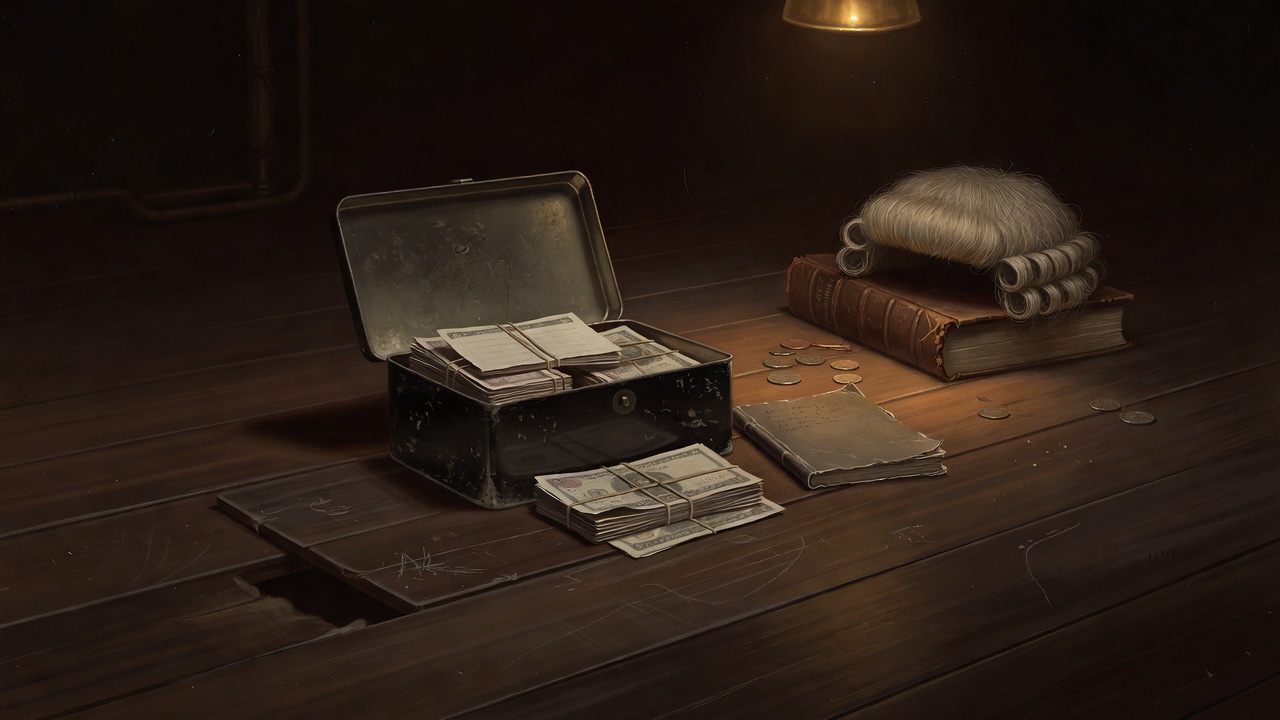 A nineteen-year-old Cobb is caught with the dock-workers' burial fund and will not say one word in his own defence — and the silence everyone has read as guilt is in fact the only act of love his family has left, and the one thing standing between the boy and the truth.
The Burial Fund
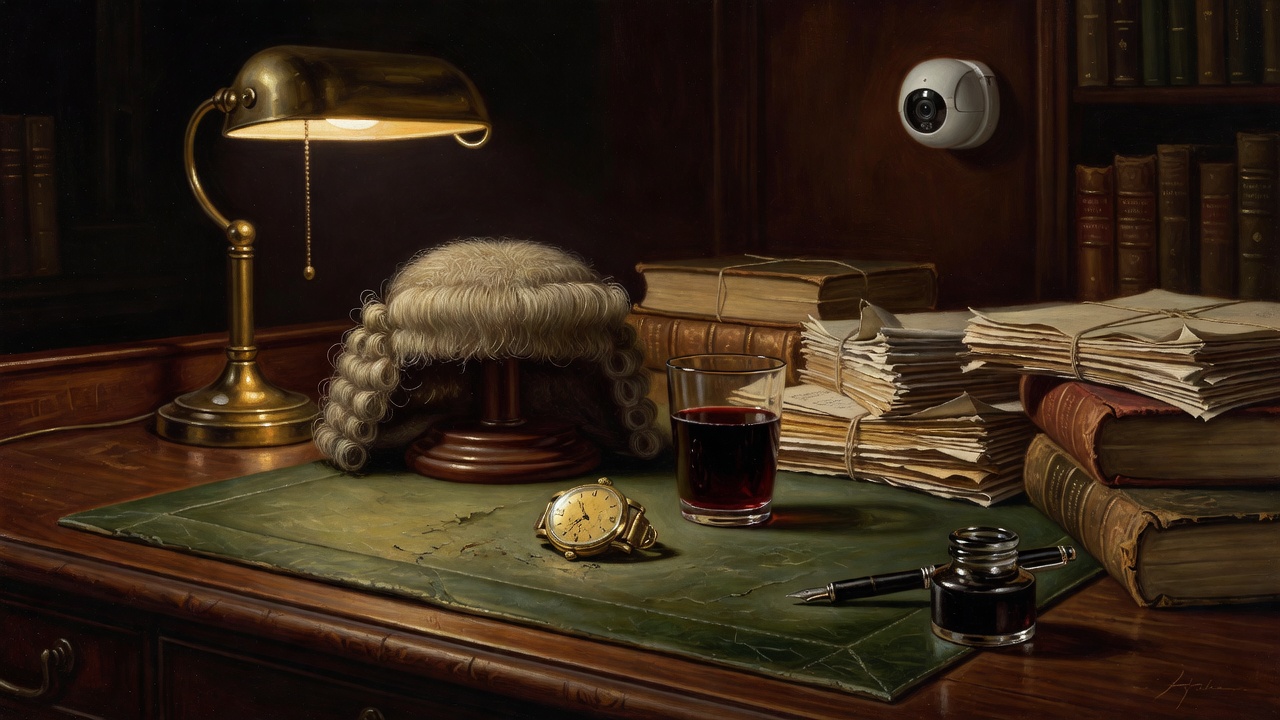
 The spectrometer said the wine was a forgery, the master of wine agreed, and a man's life was to be ended over a bottle — and not one of them had thought to ask the only question that matters about a fake, which is who it was made to please.
A Question of Vintage
 They had her on three cameras, her phone, and a swipe card, which in the modern view is the same as having a confession — and which proves only that the machine saw exactly what she did, and understood nothing whatever about why.