
The Paper House
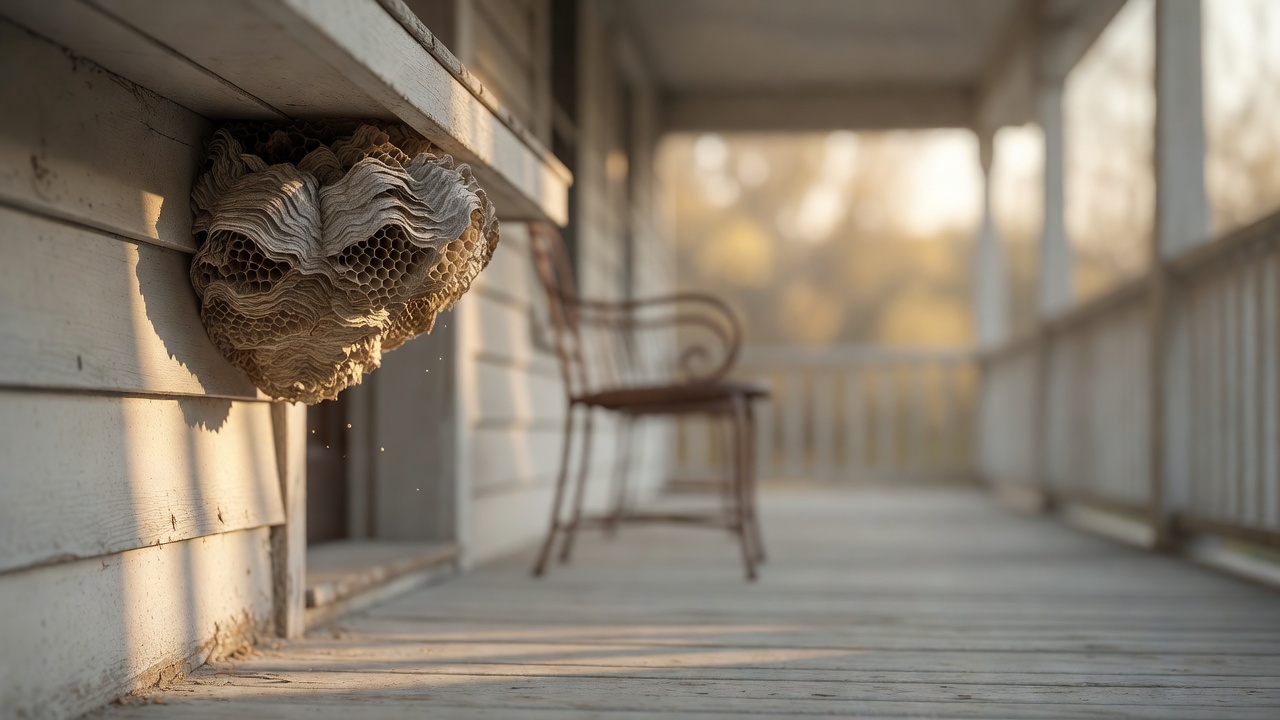
The nest has been there all summer, and her mother has been describing it on the telephone for all of that summer, so that Cora has come to know it entirely through the voice of a woman afraid of it: grey, her mother said in June, like a lantern made of ash, and then in July the size of a fist, and then a child's head, and then in August, with something in her voice that wasn't quite pride, big as the church bell now, Cora, you wouldn't believe the size of it.
She believes it. She's standing under it on the back porch in the last good light of the afternoon, her head tipped up, and it's larger than her mother's voice had managed to make it, the way the real thing is always both smaller and larger than the reported thing — smaller because it's only paper, and larger because it's here, above her, faintly breathing, the air around its grey mouth busy with a coming and going she can feel on her face like weather.
Tomorrow at eleven she'll be on a plane. The city she's going to is a city she has been to twice, both times in someone else's company, and the apartment she has taken there she has seen only in photographs a letting agent sent, rooms emptied of whoever lived in them, the kind of light in them that belongs to no one yet. She has spent the morning not packing, because the packing is done, and she has driven the two hours out to her mother's house to do the one thing left, which is this: to take the nest down before she goes, because her mother can't, and because it has become, over the long telephone summer, the only subject the two of them could hold between them without dropping it.
They have talked, this summer, more than they have talked in years, and about less. The calls come on Sunday evenings and they have a shape Cora could draw with her eyes shut: the weather first, hers and her mother's, two weathers two hours apart compared as though the distance between them could be measured in cloud; then the news of the road, who has died, who has sold up, whose son has done well or not done well; and then, reliably, when the silence began to gather at the far end of the line the way water gathers at the foot of a door, the nest. The nest was a gift, really, though neither of them would ever have called it that. It gave them a thing to tend together across the wire. Her mother reported its growth the way other mothers might report a grandchild's, and Cora, who has given her no grandchild, who has given her in the end very little she knows how to be proud of out loud, asked after it, its size, its temper, whether the men who come about such things had been called, and her mother always said no, not yet, she was waiting, and didn't say for what, and Cora didn't ask, because she knew, the way you know the last line of a hymn before you reach it, that her mother was waiting for her.
Her mother is in the kitchen behind the screen door. Cora can hear the particular sounds of her — the tap running and stopping, a cupboard, the small sigh of the oven door, a woman making more food than two people will eat, which is the way her mother has always said the things she can't say, in pastry, in the too-large pot, in the second loaf wrapped in a cloth on the side for Cora to take, for the journey, as though a person could carry bread across an ocean.
"You're not to go up that ladder," her mother says through the screen, not turning. "Your father went up that ladder for thirty years and it was never once safe."
"I know how the ladder works, Mum."
"He used to say that too." The tap again. "And then the one time."
There was no one time. Her father came down off ladders his whole life and died indoors, in the chair, in winter, with the television on, and it's one of the small permanent arguments between them that her mother has rearranged his ending into something with a moral in it, a warning she can keep deploying, while Cora has kept the duller truth, which is that he simply stopped, the way the furnace stops, between one breath and the next, leaving the house colder. They have never agreed about this and they won't agree about it today. It's easier, anyway, to argue about the ladder than about the plane.
The ladder is in the garage where it has always been, the aluminium gone chalky with age, and beside it on its nail is the thing she has come out really hoping to find, her father's smoker, the little bellows-and-canister he used for the hives he kept the two summers before he got tired of them. The leather of the bellows has cracked but it draws when she works it, wheezing, and she stands in the dim of the garage squeezing air through a dead man's tool and is surprised by nothing so much as how the smell of the cold ash inside it is still, faintly, the smell of her father's hands.
She knows the method because he taught it to her, or rather because she watched him do it once, a paper nest in the apple tree the year she was eleven, and what she remembers isn't the words but the patience of him, the way he didn't hurry the smoke, the way he said you give them the evening early, you tell them it's time to be still, and the wasps had gone slow and stupid in the false dusk he made for them, and he had taken the nest down whole and shown her the inside of it, the grey combs, the chambers like a city seen from very high up, and she hadn't been afraid because he wasn't afraid, and that, she thinks now, is the whole of what a parent is for and the whole of what they can't do forever.
Her mother was there too, that day under the apple tree, though Cora has had to go looking to find her in the memory, the way you find the photographer in a photograph only by the angle the thing was taken from. She was on the step with a bowl in her lap, doing something to fruit, and what Cora remembers now, having gone looking, is that her mother didn't watch the nest at all. She watched the two of them, the man and the girl up in the leaves, with an expression Cora had no name for at eleven and isn't certain she has a name for now, something that was love but was also a kind of accounting, as though she were standing just outside the warmth of the thing and counting it, making sure of it, the way you count money you're afraid of losing. Cora had wanted, even then, to call her over, to make the two of them into three under the tree. But you didn't call her mother over. Her mother came, or didn't come, by laws of her own.
She waits for the light to go long. You do it at dusk; even her mother knows that, has said it on the phone, your father always said dusk, the two of them agreeing through him the way they have always found it easiest to agree, with a third person in the room, living or dead, to carry the weight of the tenderness for them.
While she waits she sits on the porch step and her mother comes out at last and sits beside her, lowering herself with both hands on the rail, and they look at the garden, which is past its best, the way August gardens are, gone to seed and to a kind of exhausted abundance, the tomatoes split, the beans hard in the pod, more than anyone could use.
"You'll let it get cold in that flat," her mother says. "Foreign places, the heating's never right."
"It's a warm country, Mum. That's rather the point."
"Warm in the day." Her mother has an answer for everything, has had for seventy-nine years. "It's the nights I'd worry about."
Cora doesn't say that she has been managing the nights for some time now, that the nights are in fact the thing she's leaving for, the long blue nights of the old house she has just sold, the bed too wide, the marriage gone out of it like heat out of a room. She doesn't say any of this because to say it would be to hand her mother something her mother doesn't know how to hold, and they'd both stand there with it dropped between them, and so she says instead, "I'll send you a picture. Of the heating. So you can see it's right."
Her mother makes the sound that's almost a laugh, the small exhalation that's as far as she goes, and they sit in it, and a wasp comes low across the step and her mother doesn't flinch, the fear gone smooth in her now, the way you stop hearing a clock.
The marriage ended quietly, in the end, the way her father ended, between one breath and the next after years of breathing, and Cora has told her mother only the fact of it and none of the shape, has said we've decided to separate in the flat voice you keep for a thing you don't want opened. Her mother had been silent a moment on the line and then had said only, well, and after that, you'll want feeding up, and that had been the whole of it, the largest failure of Cora's life folded into an offer of food. And Cora had been, to her own surprise, grateful, grateful past speaking, because there are things a person can't bear to have looked at directly, and her mother, who looks at everything, who has appointed herself the watcher of all of it, had known not to look at that, had turned her face from it on purpose the way you turn from someone undressing.
"It was your father's," her mother says, after a while, nodding at the smoker where Cora has set it on the step. "I couldn't have told you we still had it."
"It still works."
"Of course it does." She says it as though it's the most natural thing in the world that a tool should outlast the hand, and perhaps to her it is; the house is full of the things he touched, the things she hasn't moved, his coat still on the hook by the door not out of grief, her mother would say, but because where else would a coat go. "He'd be glad you knew how."
It's the nearest thing to praise her mother has handed her in some years, and Cora holds very still under it the way you hold still when a wild thing comes close, not wanting to startle it back into the hedge, and the moment passes, as those moments do, into the smaller business of the light changing, the swifts coming out, the first coolness off the grass.
When the light is right she sets the ladder against the eave. Her mother stands at the bottom with both hands on it, though her holding it can make no difference, and never has.
The smoke when she works the bellows comes pale and slow, and she sends it up under the grey paper mouth of the nest the way she was shown, not hurrying, and she finds that she's saying it, under her breath, the thing her father said, it's time to be still, not to the wasps but to herself, to her own hands, which want to hurry, which want this over with, which want already to be tomorrow, on the plane, above the cloud, somewhere the past can't telephone.
And the smoke teaches her the patience the way it taught him, because there's no hurrying it, because to hurry is to anger them and to anger them is to be driven back down the ladder, and so she stands and works the cracked bellows slow and even and watches the light go out of the garden by degrees, the green going to grey, the far hedge losing its edges, the swifts giving over the air to the first soft blundering of the moths. She feels the day close around the two of them, herself on the ladder and her mother at its foot, in a quiet that isn't the telephone quiet, not the quiet that gathers at the foot of a door, but the other kind, the kind her father could make, the kind that isn't absence but a held breath, a stillness two people can stand inside together without either of them having to fill it. And she thinks that if she could choose one thing to carry across the water it would be this, not the bread and not the nest but this manufactured dusk, this permission to be still.
The wasps go slow. They come out into the smoke and stand on the air a moment, confused by the early evening she has made for them, and then they fold back into the paper, and the coming and going thins, and stops, and the nest above her is for the first time all summer entirely still.
She had thought it would be light. It's the thing no one tells you about a paper house, that the paper is only the skin of it, and underneath the skin are the floors, the grey combs layered down and down, and the nest when it comes free into her two hands is heavy, astonishingly heavy, the weight of a sleeping cat, the weight of every wasp that has ever worked on it carried in the work itself, and she nearly drops it, not from fear but from the surprise of its mattering so much more than it had any right to from the ground.
"You have it?" her mother says. "Cora. You have it?"
"I have it," Cora says. "I have it."
She comes down slowly with both arms around the thing, the way you carry something that doesn't belong to you, and on the lowest rung she turns and her mother is right there, closer than she expected, her mother's face tipped up the way Cora's own had been tipped up hours before under the whole grey weight of it, and for a second neither of them says anything, and Cora is holding the paper house against her chest, and they're both looking at it, this thing that has filled the summer, this thing they built a season of talking around so that they'd have something to say.
"All that," her mother says softly. "Out of nothing. Out of chewed-up wood and spit. Isn't that the thing." She reaches out and lays one finger against the grey paper, the lightest touch, the way you might touch a sleeping child's foot. "They never knew you were coming for it. They just kept building."
And Cora wants, then, to say the thing. She can feel it rise in her, large and unwieldy, the thing she has driven two hours and is flying four thousand miles partly in order not to have to say, which is I don't know how to leave you in this house, or perhaps it is come with me, which is impossible, or perhaps it's only the oldest one, the one underneath all the others, the one she has been unable to say since she was a child standing under an apple tree watching her father be unafraid, did you, were you, am I — the sentence that has never once in her life found its end. She opens her mouth around the beginning of it.
"They'll come back, you know," her mother says, before she can. "Next year. To the same eave. They always come back to the same place, your father said. Something in the wood remembers them." She takes her finger from the nest. "You'd think they'd learn."
And there it is, the thing said and not said, the whole of it folded into a fact about wasps the way everything between them has always been folded into a third thing, a ladder, a loaf, a dead man's tool, and Cora hears all of it, come back, the same place, the wood remembers, and she does not correct her mother, does not say that she has sold the house she might have come back to, does not say that she does not know if she is a thing that comes back. She holds the paper house and she says, because it is the register they have always been able to speak in, the only one, "I'll wrap it in newspaper. So it doesn't crush. You can keep it on the side."
"What would I want with a wasps' nest," her mother says. It will go on the side by the window, where the light comes in the morning, and sit there grey and silent all winter.
It's nearly dark now. The garden has gone to shapes. Cora stands with the weight of the nest in her arms and her mother looks at her for a moment longer, and then she turns, and she reaches up to the wall by the door, and she switches on the porch light — though it isn't yet full dark, though there's no one coming, though the only person it could be for is already here — and the light comes on yellow and small and faithful, throwing its little human ring out onto the step, gathering already the first soft confusion of moths, and her mother holds the door for her with her body the way she has held the ladder, the way she has held everything, uselessly, completely, and goes inside to the kitchen and the too-large pot.
Cora does not follow her, not yet. She stands a moment in the new electric light with the paper house heavy and still against her chest, and she looks up at the place under the eave where it hung all summer, and there, where the nest has been, is a patch of wood the rain never reached, a paler place exactly the shape of its absence, raw and clean against the weathered grey around it, the way the wall behind a picture is paler when at last you take the picture down — the clean raw place where a thing had been, the shape of an absence the weather will take years to grey over, that the wood, in its slow way, will go on remembering long after she is across the water; and she stands there looking up at the pale place, and the moths come to the light, and somewhere behind her in the house a tap runs and stops, and she does not say it, and she does not say it, and the light stays on.
Enjoyed this story?
Read next
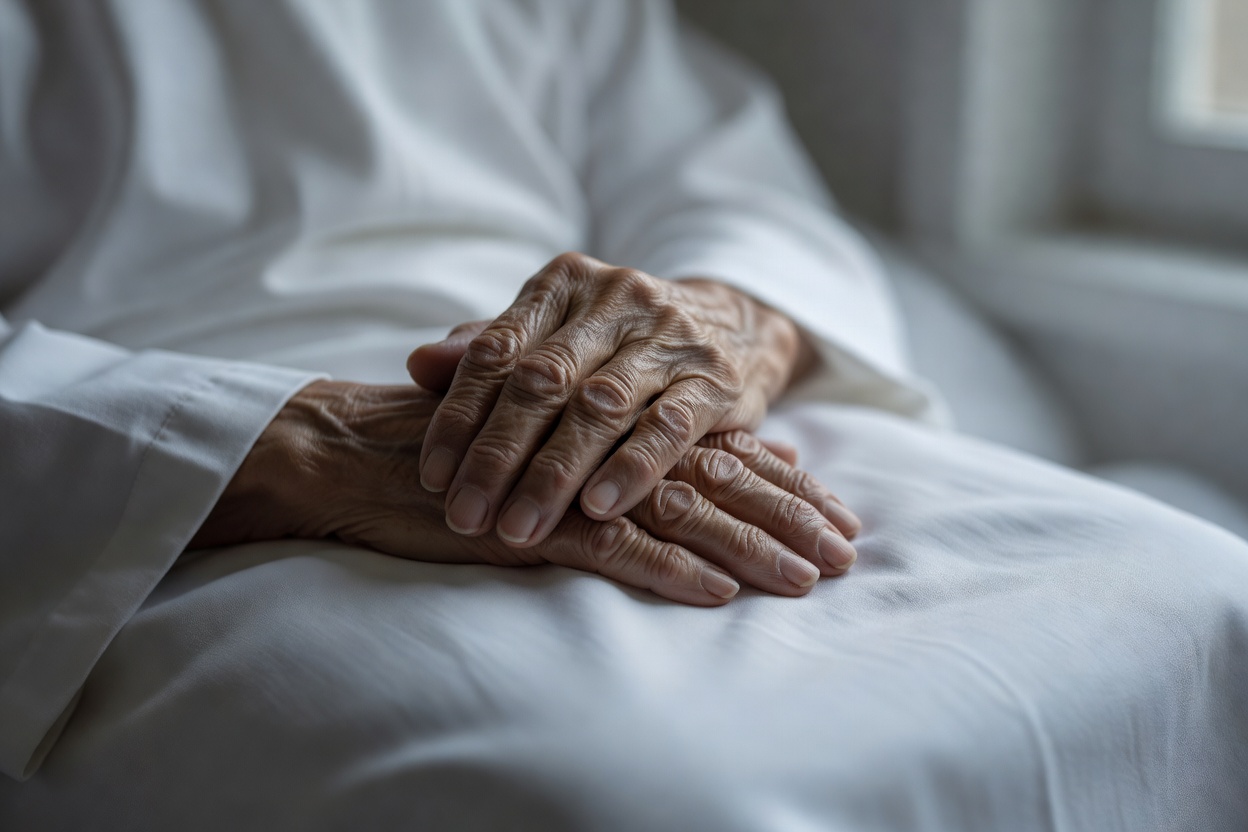 The daughter has sent four pages of instructions and will not be coming, and so the woman on the table and the woman who loved her will pass each other today, if they pass at all, only through the two hands of a stranger.
A Good Likeness
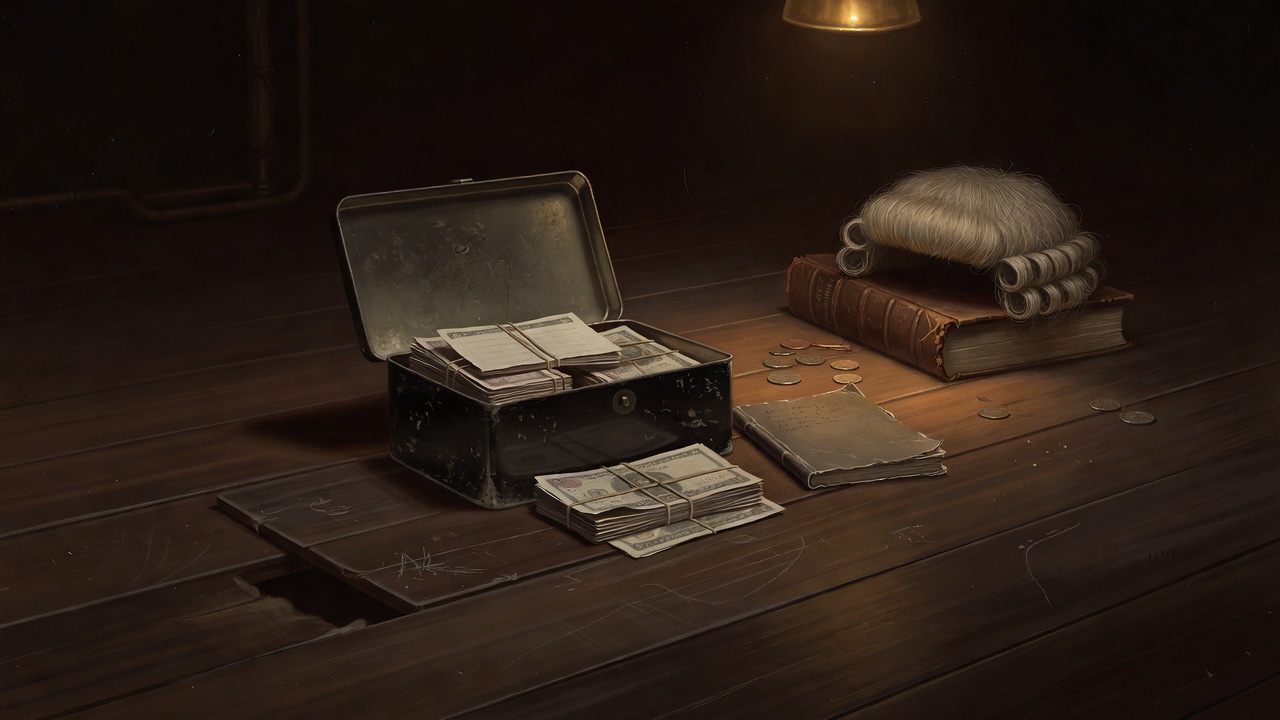 A nineteen-year-old Cobb is caught with the dock-workers' burial fund and will not say one word in his own defence — and the silence everyone has read as guilt is in fact the only act of love his family has left, and the one thing standing between the boy and the truth.
The Burial Fund
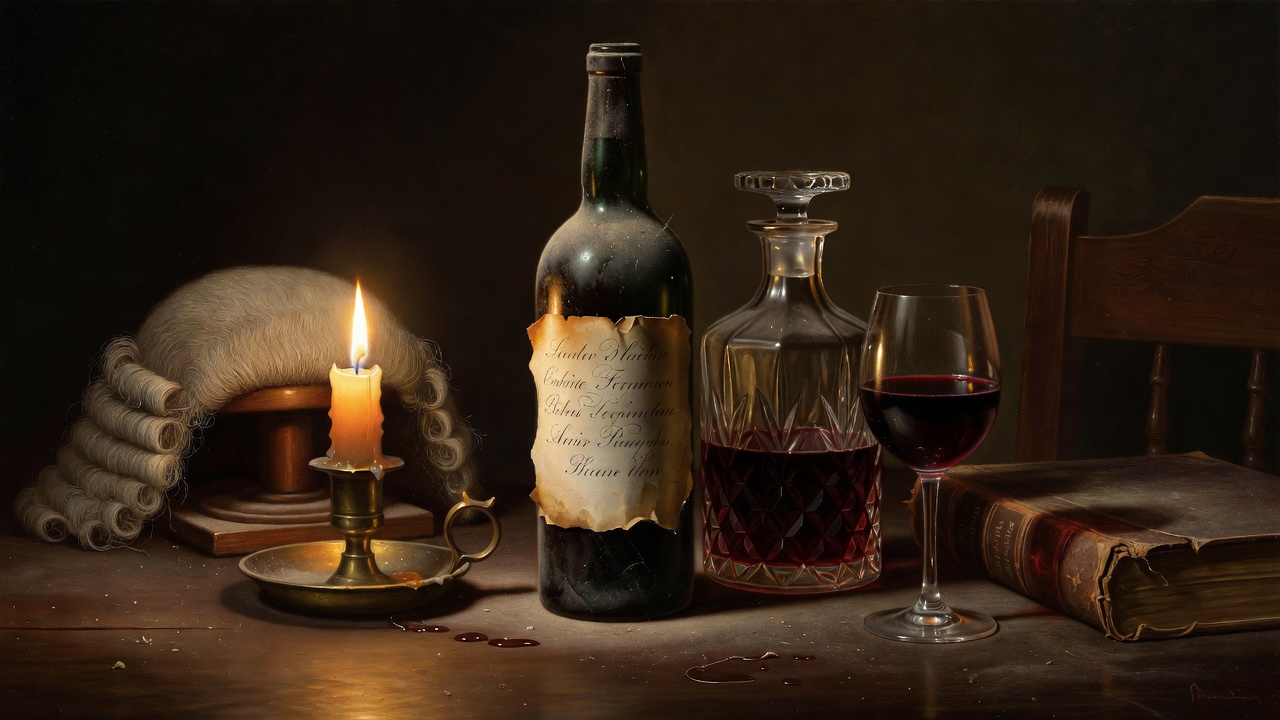 The spectrometer said the wine was a forgery, the master of wine agreed, and a man's life was to be ended over a bottle — and not one of them had thought to ask the only question that matters about a fake, which is who it was made to please.